
Blog • Published on:December 4, 2025 | Updated on:December 4, 2025 • 14 Min
How Americans Can Move to Thailand in 2026
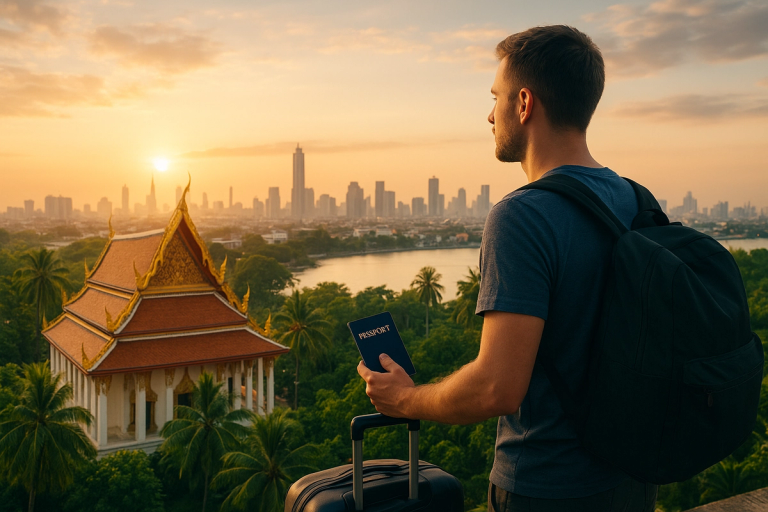
Are you a US citizen thinking about moving to Thailand in 2026?
You’re not alone.
Today, more than 45,000 Americans are already living in Thailand, choosing cities like Bangkok, Chiang Mai, Phuket, Pattaya, and Hua Hin as their long-term base.
Many arrive for the climate and coastline, others for the lower cost of living, and many for the comfort of joining an already strong American expat community.
This guide gives you the requirements, visa options that actually work for US citizens, and the practical steps to settle in Thailand comfortably.
Why Are Americans Choosing Thailand?
Is Thailand a Popular Choice for US Expats?
Yes. Thailand has become a top relocation destination for many Americans.
The American resident population here has grown significantly in recent years.
People are arriving for a mix of reasons: retirement, remote work, business, or simply a better quality of life.
What Lifestyle Advantages Does Thailand Offer US Expats?
- Warm and tropical climate year-round
- Wide variety of living environments: from coastline to big cities, to quiet towns
- Strong expat infrastructure: international hospitals, English-friendly services, global-standard amenities
- Large English-speaking expat community, easier social integration and support networks
These factors tend to make the move smoother, especially for those coming from large or expensive US cities.
Is Life in Thailand More Affordable Than in the US?
For many Americans, yes. Daily expenses tend to be much lower than in US urban centers.
- Rent can be 40-70% cheaper than in comparable US cities
- Private healthcare and many everyday services are significantly less expensive
- Costs for food, transport, and leisure tend to stay reasonable even in higher-end areas
This affordability, without major lifestyle compromise, is a major draw for retirees, remote workers, and families.
Is There a Real Expat Community Already in Place?
Definitely. Cities like Bangkok, Chiang Mai, Phuket, Pattaya, and Hua Hin host well-established expat neighborhoods, expat-friendly real estate, coworking spaces, international schools, and clinics familiar with foreigners.
For new arrivals, that infrastructure already in place makes settling in easier.
What Do US Citizens Need Before Entering Thailand?
Do Americans Need a Visa to Enter Thailand?
Not always.
US citizens can enter visa-free for short stays (typically 30 days, extendable once inside Thailand).
However, anyone planning to live, work, study, or stay long-term must apply for the appropriate visa before arrival.
(This distinction is important, because many Americans misunderstand the short-stay entry rule.)
What Are the Basic Entry Requirements for US Citizens?
To enter Thailand, you must have:
- A US passport valid for at least 6 months
- A confirmed onward or return ticket (for visa-exempt entry)
- Proof of accommodation (hotel booking or rental)
- Funds to support your stay (immigration may request proof)
Most long-stay visas require additional documentation, which must be prepared before you travel.
What Documents Do Americans Need for Long-Stay Visas?
Requirements vary by visa type, but common prerequisites include:
- Passport valid 6–18 months (varies by visa)
- Visa application form
- Recent passport photos
- Bank statements or financial proof
- Health insurance coverage (mandatory for retirement and O-A visas)
- Background check (required only for certain visas such as O-A retirement and some Education visas)
Immigration rules change occasionally, so financial thresholds and insurance requirements should always be confirmed at the time of application.
Do Americans Need to Legalize Their Documents?
Sometimes.
US-issued documents such as FBI background checks or certain civil documents may need:
- Notarization,
- Apostille, plus
- Legalization by the Royal Thai Embassy/Consulate.
This applies mainly to:
- Retirement Visa
- Certain Education Visas
- Some work/business filings
For other visas, simple document copies or bank statements are enough.
Direct Answer Summary
To move long-term, Americans need a valid passport, the right visa, financial proof, and in some cases legalized documents and insurance.
Which Thailand Visas Are Most Practical for Americans?
Thailand offers several long-stay visas, but only a few are genuinely useful for Americans relocating or staying for extended periods. Below is a condensed, high-relevance overview.
Visa Overview
Destination Thailand Visa (DTV)
The DTV is aimed at people who stay long-term but do not work for a Thai employer.
What makes it relevant:
- Multi-entry validity spanning several years
- Up to 180 days per stay
- Suitable for Americans earning online or staying seasonally
This is the visa many remote-working Americans now consider instead of applying for a Non-B or Education visa.
Thailand Elite Visa
This is the most straightforward long-stay route for Americans who want comfort and stability.
Why people actually choose it:
- No income checks, insurance requirements, or renewals
- 5–20 year stay with airport and immigration privileges
- Ideal for remote workers, retirees, or anyone who dislikes annual bureaucracy
The only barrier is the membership fee, which replaces traditional visa requirements.
Retirement Visa
For Americans aged 50+, this is the most affordable long-term option.
Applicants must show financial resources either through a Thai bank deposit or monthly income.
O-A applicants must also have health insurance that meets current government requirements.
This visa is renewable annually and offers a stable long-term living arrangement, but it does not allow any form of employment.
SMART Visa
The SMART Visa targets highly skilled professionals, executives, investors, and startup founders in specified industries such as technology, digital services, engineering, and advanced manufacturing.
Validity ranges from one to four years, but the eligibility criteria are strict and tied to approved employers or BOI-supported projects.
Education Visa
This option works for Americans enrolled in Thai language programs or university studies.
Main point:
- A legitimate way to stay long-term while studying
- Immigration monitors attendance closely
It’s a useful option for Americans who want to learn Thai or study locally, though it does not permit employment.
Business Visa + Work Permit
Americans who plan to work legally in Thailand, whether as employees or business owners, must obtain a Non-B Visa and a separate work permit.
Relevance:
- Required for legal work
- Company must meet Thai employment and capital rules
- Annual renewals tied to company compliance
This is the most regulated path but essential for Americans wishing to work locally.
Where Should Americans Live in Thailand?
When Americans choose a place to settle in Thailand, the decision is usually driven by three things: infrastructure, lifestyle, and long-term practicality.
Below is a clearer picture of why each city attracts US citizens and what actually defines daily life there.
Bangkok
Americans choose Bangkok because it’s the only city in Thailand where nearly everything works like a major international capital. This matters for people who want structure over scenery.
Bangkok makes sense if you:
- need reliable international hospitals for chronic care or specialist treatment
- want access to American-style neighborhoods (Phrom Phong, Thonglor, Sathorn)
- work for a US or multinational company
- need international schools for children (Bangkok has the highest concentration in Southeast Asia)
- want the fastest immigration services and government offices
It’s also where Americans find the most consistent internet, coworking options, and long-term rentals that match Western expectations.
Cost varies by district, but Bangkok is the most predictable base for long-term living.
Chiang Mai
Chiang Mai attracts Americans who want a quieter city with a lower cost of living but still need comfort and infrastructure. People move here because daily life is simpler and less expensive.
Most long-stay Americans choose Chiang Mai because housing is significantly cheaper than Bangkok or Phuket, the city has a strong wellness culture, also, it’s one of the easiest cities in Asia for remote workers.
It’s also a popular place for retirees who want low pollution months, easy domestic travel, and a community that feels calm and grounded.
Phuket
Phuket is not just beaches; it’s one of the few islands in Asia with infrastructure strong enough for long-term foreign residents.
Americans choose Phuket because:
- it offers beach life without sacrificing international hospitals or good schools
- the expat community is large and well-established
- the island has neighborhoods tailored to long-term residents
- remote workers can live in a tropical setting while still having strong internet and coworking spaces
- it’s easy to split time between Thailand and the US thanks to a well-connected airport.
Phuket is more expensive than Chiang Mai or Pattaya, but many Americans find the lifestyle trade-off worth it.
Pattaya
Americans who want to live by the sea but don’t want Phuket prices often end up in Pattaya. It’s one of the most accessible coastal cities for long-term residents.
People choose Pattaya because:
- housing costs are lower but infrastructure remains solid
- there are reliable private hospitals and English-speaking doctors
- it’s very close to Bangkok, which matters for flights and consular visits
- long-stay expat communities are large and supportive
- condos with Western-style amenities are widely available
It’s articularly popular with retirees and seasonal long-stay visitors who value convenience and low daily expenses.
Hua Hin
Hua Hin appeals to Americans who want calm coastal living without the tourism intensity of Phuket or Pattaya.
Why Americans choose Hua Hin:
- it has a strong reputation among retirees for safety and consistency
- the town offers clean neighborhoods, golf courses, international clinics, and good-quality housing
- the weather is more stable than northern Thailand
- it’s close enough to Bangkok for medical visits, shopping, or travel
This is the place Americans choose when they want the simplest, least stressful version of Thailand.
How Does Healthcare Work for US Citizens Living in Thailand?
Are International Hospitals Easily Accessible?
Yes. Thailand has some of the best private hospitals in Asia, and many Americans rely on them for routine and specialist care.
Facilities like Bumrungrad International, Bangkok Hospital, Samitivej, and Bangkok Hospital Phuket operate at Western standards, with English-speaking doctors and modern equipment.
This is one of the main reasons Americans feel comfortable relocating long-term.
Do Americans Need Health Insurance for Thai Visas?
It depends on the visa type.
- O-A Retirement Visa requires government-approved health insurance with minimum inpatient and outpatient coverage.
- Other visas (DTV, Elite, Non-B) do not legally require insurance, but private coverage is strongly recommended because uninsured treatment costs can add up quickly for major procedures.
Most long-stay Americans use international insurance plans because US-style employer coverage does not apply overseas.
How Much Does Private Healthcare Cost in Thailand?
Routine care is affordable, but advanced treatment still requires insurance. For example:
- Specialist consultation: typically $20–$40
- MRI: $180–$300
- Hospital stay: far lower than US pricing but still significant for major surgeries
Compared to the US, Americans often save 60–80% on private healthcare while receiving strong quality of care.
What Legal Requirements and Documentation Should Americans Expect After Arrival?
What Is TM30 Reporting and Why Does It Matter?
TM30 is a notification of your place of residence.
Anyone staying long-term in Thailand must ensure their landlord or property owner reports their address to immigration when they move in.
It sounds small, but not complying can cause problems during visa renewals or extensions.
Most serviced apartments and condominiums handle the TM30 automatically, but Americans renting a private home often need to remind the owner to file it.
Do Americans Need to File 90-Day Reports?
Yes, if you stay in Thailand on a long-stay visa. Every 90 days, residents must confirm their current address with immigration (online, in person, or by mail).
This is separate from TM30 and is required until you leave the country or obtain a different visa status.
Do Americans Need a Thai Bank Account?
Not for every visa, but it’s required for some.
You need a Thai bank account if you’re applying for:
- a Retirement Visa using the bank deposit method
- a Non-B Visa for employment
- certain long-term extensions that require proof of local financial stability
Banks follow FATCA rules closely, so some branches require extra documentation from US citizens. Bangkok Bank and Kasikorn are the most familiar with American clients.
Are There Long-Term Residency Permits Available?
Thailand does offer permanent residency (PR), but it involves quotas, interviews, and multi-year eligibility.
Most Americans instead choose:
- the Elite Visa for long-term convenience, or
- annual extensions tied to work, retirement, or family.
PR is possible, just not common. Applicants usually need several years of Thai tax records and stable local income.
What Financial Rules Should Americans Know Before Relocating to Thailand?
How Can Americans Open a Thai Bank Account?
Most US citizens can open a local account, but the process depends on the bank and visa type.
Bangkok Bank, Kasikorn, and SCB are the most familiar with FATCA requirements, which means they may ask for:
- a valid long-stay visa
- proof of address in Thailand
- a US tax declaration form
For retirement or work visas, having a Thai account is mandatory. For remote workers, it’s optional but useful for rent, utilities, and local transfers.
Do Americans Pay Taxes in Thailand?
Only if they become Thai tax residents.
A person is considered a tax resident if they stay 180 days or more in a calendar year.
Thailand currently uses a remittance-based system for foreign-sourced income, meaning income earned abroad may only be taxed if it is brought into Thailand in the same year it was earned.
This rule is frequently updated, so Americans relying on remote income should check the exact policy at the time of filing.
Do Americans Still Have US Tax Obligations While Living Abroad?
Yes. US citizens must file federal tax returns regardless of where they live.
Most American expats rely on:
- the Foreign Earned Income Exclusion (FEIE)
- foreign tax credits
- or a combination of both
Living abroad does not remove US tax obligations, but dual compliance is straightforward with proper documentation.
What Should Americans Know About Sending Money to and from Thailand?
Thailand is still a partially controlled currency environment, meaning certain large transfers must be documented.
Everyday transactions are easy, but for transfers over a defined threshold, banks may request proof of income, invoices or contracts, and purpose of the transfer.
Most Americans use Wise, XE, or direct bank transfers for regular remittances, as these offer better exchange rates than US banks.
How to Relocate to Thailand Step by Step
What Should You Prepare Before Leaving the US?
Start planning about 2–3 months ahead.
Choose your visa, gather financial proof, and check whether any documents need notarization or embassy legalization (mainly for retirement or work visas).
Keep digital copies of everything. Thai immigration often asks for supporting documents during extensions.
How Do You Find Accommodation in Thailand?
Most newcomers book a short-term rental first, then switch to a 6–12 month lease once they know the area.
A typical long-term rental requires two months’ deposit.
Bangkok and Phuket renters prioritize access to hospitals and transport; Chiang Mai renters often choose walkable neighborhoods with coworking spaces.
Should You Learn Basic Thai?
Yes, even a small amount makes banking, deliveries, and daily errands easier.
Major cities are English-friendly, but basic Thai removes many small obstacles.
How Do You Set Up Utilities and Mobile Service?
Mobile service is quick to set up at the airport or any AIS, TrueMove, or DTAC shop.
Home internet is installed within a few days after signing a lease.
Landlords usually handle electricity and water setup for condos; house renters may need to register utilities themselves.
What Are the Pros and Cons of Moving from the US to Thailand?
What Are the Main Advantages for American Expats?
Lower cost of living without sacrificing comfort
Housing, private healthcare, transport, and daily services are significantly cheaper than in most US cities while still offering strong quality.
High standard of private healthcare
International hospitals, English-speaking doctors, and medical services that are accessible and predictable make long-term living easier, especially for retirees.
Established expat communities
Americans moving to Bangkok, Chiang Mai, Phuket, Pattaya, or Hua Hin integrate quickly because the infrastructure for long-term foreigners is already in place.
Flexible long-stay visa routes
Options like the Elite Visa, Retirement Visa, and DTV give Americans multiple pathways without needing permanent residency.
Safe, comfortable lifestyle
Clean neighborhoods, warm climate, and day-to-day conveniences make Thailand an easy place to settle into.
What Challenges Should You Be Ready For?
Work restrictions
Americans cannot legally work in Thailand without a specific work visa or SMART Visa. Remote work is common, but employment within Thailand requires formal authorization.
Climate adjustments
High humidity, rainy seasons, and, in some cities, periods of air pollution (such as Chiang Mai during certain months) require adaptation.
Bureaucracy
90-day reporting, TM30 requirements, visa renewals, and occasional document checks can feel unfamiliar compared to US systems.
Cultural differences
Communication styles, slower administrative processes, and different expectations around service or timelines take time to adjust to.
FAQs About Moving to Thailand as a US Citizen
Can Americans live in Thailand long-term?
Yes. Americans can live in Thailand long-term with the appropriate visa.
The most common long-stay options are the Elite Visa, Retirement Visa, Business Visa, and DTV. Permanent residency exists but requires several years of qualifying residency and Thai tax records.
How much money do you need to live comfortably in Thailand?
Most Americans live comfortably on $1,500–$2,500 per month, depending on the city.
Bangkok and Phuket are the most expensive; Chiang Mai and Pattaya are more affordable. Retirees often choose cities where healthcare and housing are both accessible and reasonably priced.
Can Americans work remotely from Thailand?
Yes. Americans working for non-Thai companies can generally work remotely while living in Thailand, provided their visa category allows long stays (DTV, Elite Visa, etc.).
Working for a Thai employer requires a Non-B Visa and a work permit.
Can US citizens buy property in Thailand?
Americans cannot buy land, but they can legally own:
- condominiums (freehold),
- long-term leases (30-year leaseholds), and
- structures built on leased land.
This is one of the most common investment structures for expats.
Do Americans need health insurance to enter or live in Thailand?
Not for all visas, but for some.
The O-A Retirement Visa requires government-approved health insurance.
For other visas, insurance isn't mandatory but strongly recommended due to varying healthcare costs for major treatment.
References
Thailand Immigration Bureau — Visa Categories, Long-Stay Regulations, and Reporting Requirements. Referred from: https://www.immigration.go.th/
Royal Thai Embassy (Washington, D.C.) — Visa Requirements for US Citizens. Referred from: https://thaiembdc.org/
Thai Ministry of Foreign Affairs — Consular Services and Visa Information. Referred from: https://www.mfa.go.th/
Thailand Board of Investment (BOI) — SMART Visa Eligibility and Application Rules. Referred from: https://smart-visa.boi.go.th/
Written By

Alice Emmanuel
Alice Emmanuel is an expert in residency and citizenship by investment, specializing in government compliance and program optimization. With over 8 years of experience, she has guided high-net-worth individuals through acquiring global mobility and new citizenships, particularly in Europe, the Caribbean, and the Middle East. Alice's in-depth knowledge of Middle Eastern residency programs makes her a trusted advisor for investors seeking security and diversification in the region.
Related Articles







Recently Published









Book a free consultation